4 Cardiovascular Scans and Screening Tests You Should Know
Dec 29, 2025
Disclaimer: Not Medical Advice. Opinions are my own.
Was this newsletter forwarded to you? Subscribe here
In partnership with IM8
Today's newsletter at a glance:
Prevention Starts With Learning
4 Cardiovascular Scans & Screening Tests
Mindset Towards Screening Tests
A primary goal of my platform is to simplify and communicate medical concepts so everyone can understand them.
It's important to me that you know about screening tests and scans long before you hear about them in a doctor's office.
Understand, I'm not suggesting which tests you need or don't. You and your physician can do that. This article is designed to make you aware of the available options.
In today's newsletter, we are going to explore four cardiovascular scans and screening tests that we have access to today that can determine your risk of heart disease.
Ankle Brachial Index (ABI)
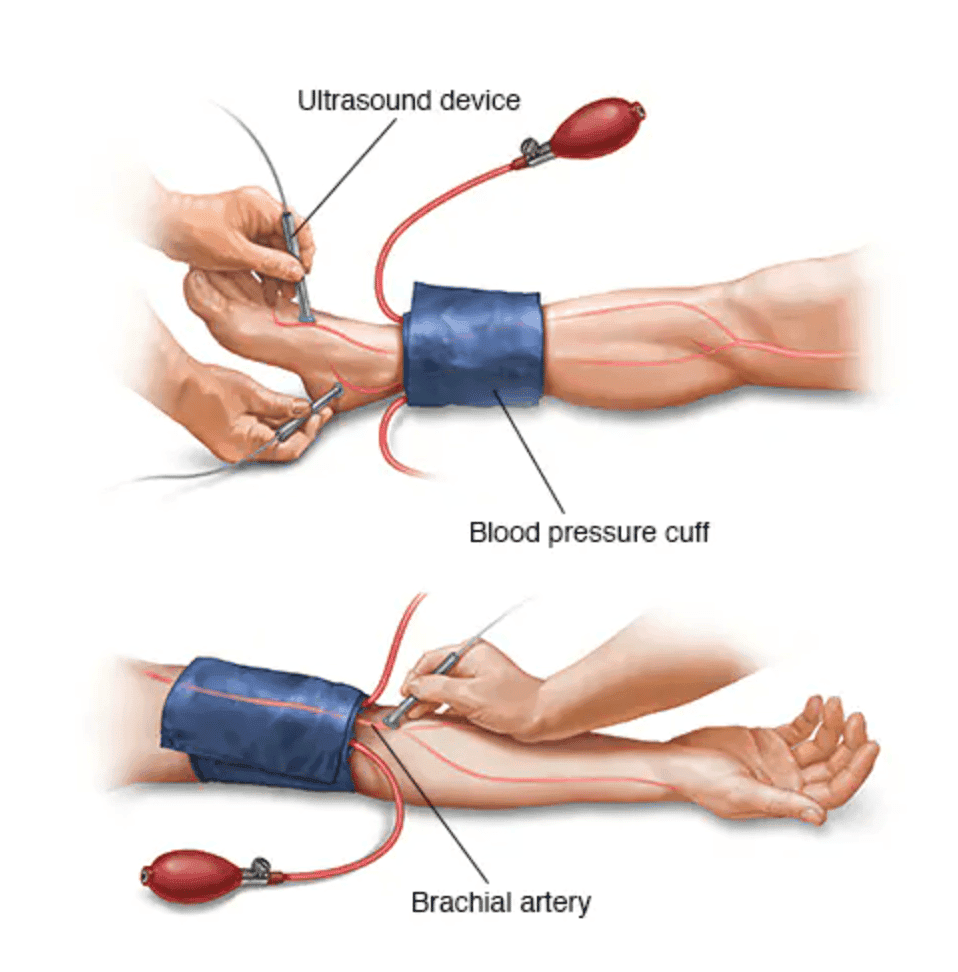
The Ankle Brachial Index (ABI) test measures the blood pressure in your ankle compared to the blood pressure in your arm.
Blood pressure cuffs are placed on both arms and ankles, and the test takes about 10-15 minutes to complete.
The goal is to assess how effectively blood flows through your limbs and to screen for peripheral artery disease (PAD).
When the pressure isn't equal across a particular area, it could suggest a potential blockage or narrowing that's hindering blood flow.
This may indicate blockages elsewhere.
Carotid Ultrasound
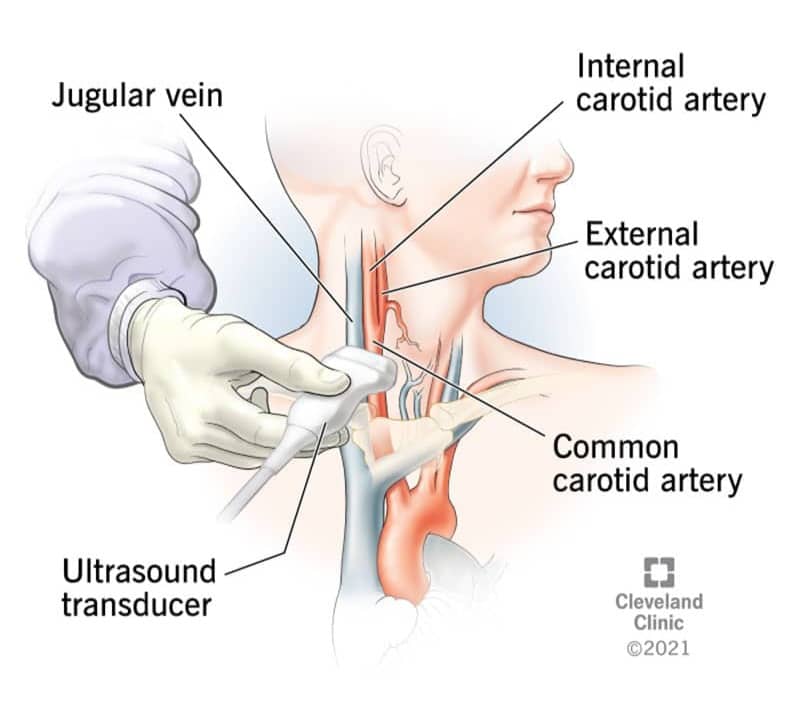
The Carotid Ultrasound is a screening test that looks at the carotid arteries in your neck, which are the major vessels that supply your brain with blood, nutrients, and oxygen.
This can help determine your stroke risk profile before symptoms arise.
The test is conducted by placing a small ultrasound probe, similar to a pregnancy ultrasound, on the neck.
What the test is looking for:
Calcified plaque build-up
Speed of blood flow
How narrow the artery is (stenosis)
Calcification in the carotid artery can indicate that plaque is present elsewhere in the body.
Echocardiogram
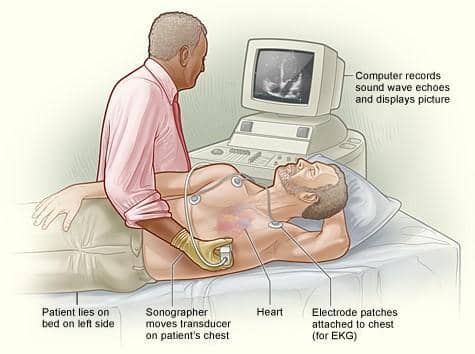
Similar to carotid ultrasonography, the echocardiogram is an ultrasound of the heart. This offers a safe and accurate picture of heart function and how well it beats.
One of the single most significant factors of heart health longevity is the strength of the heart. This can be measured by ejection fraction (EF).
The echo observes heart size, wall thickness, valve function, blood flow, and heart structure.
Ultrasound can help confirm adequate function or detect abnormalities before warning signs appear.
Cardiac CT Angiogram (CCTA)
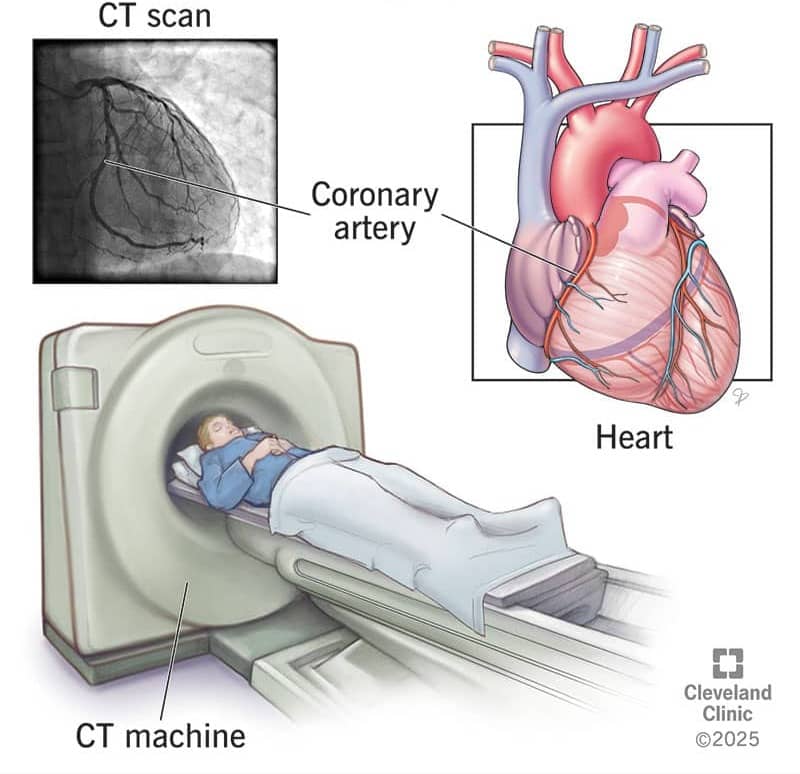
A Cardiac CT Angiogram (CCTA) is a high-resolution CT scan that images the coronary arteries, which supply the heart. Essentially, you are left with a 3D map of the heart's plumbing.
A CCTA can only be conducted with a physician referral and is typically reserved for patients with higher risk profiles, symptoms, or who want more insight into a calcium score.
This is not a screening test for everyone.
This image can detect calcified (hard) plaque and soft plaque. Surprisingly, the majority of heart attacks are caused by soft plaques rupturing.
CCTA doesn’t just tell you if you have coronary disease—it tells you where you are on the disease timeline, before symptoms force the issue.
My Final Thought on Screening Tests
Screening tests are exactly that: screening tests. Not absolutes.
Figuring out which tests, if any, should be done in collaboration with your qualified healthcare professional.
The goal is not more tests. The focus should be on the right tests based on your family history, age, risk factors, symptoms, and other factors.
Preventive screening tests have been revolutionary in detecting problems long before symptoms arise.
However, a normal result is not a lifetime clearance—and an abnormal result isn’t a diagnosis by itself.
What matters is how the information is used.
Ultimately, the test isn’t the intervention. You and your physician's response to it is.
I would argue that the value of any screening test lies not in the result, but in what you’re prepared to do with it.
Supplementation Made Simple
IM8 is my go-to all-in-one daily multivitamin.
I strive to consume nutrient-dense, whole-food meals, but I drink IM8 to further address the nutritional deficiencies in my diet.
Here's what a full day of eating looks like for me.
IM8's Daily Ultimate Essentials formula combines 92 nutrient-dense ingredients to fuel your body with a broad spectrum of vitamins, minerals, and micronutrients, establishing a strong foundation for daily health.
IM8 recently launched their IM8 Daily Ultimate Longevity, designed to promote cellular longevity and target all 12 hallmarks of aging.
IM8 is third-party tested and NSF certified, guaranteeing that what you see on the label is what you get, so you know exactly what you’re putting into your body.
If I could only take one supplement, it would be IM8's Ultimate Daily Essentials.
Only the best,
Jeremy London, MD
P.S. Don't forget to follow my podcast for free on Spotify or Apple Podcast
Disclaimer: This blog is for general informational purposes only and does not constitute the practice of medicine, nursing or other professional health care services, including the giving of medical advice, and no doctor/patient relationship is formed. The use of information on this blog or materials linked from this blog is at the user’s own risk. The content of this blog is not intended to be a substitute for professional medical advice, diagnosis, or treatment. Users should not disregard, or delay in obtaining, medical advice for any medical condition they may have, and should seek the assistance of their health care professionals for any such conditions.